
Dental X-rays are a key part of routine dental care. They give our dental team a clear view of your teeth, mouth, and soft tissue that a visual exam cannot show on its own. Below are the different types of X-rays used at Desert Pearl Dentistry, along with what can happen when problems go undetected.
Dental X-Rays
Types of Dental X-rays
Bitewing X-rays
These check for cavities between the teeth (interdental cavities) that may not be visible during a regular visual exam. Bitewing X-rays are typically taken during routine check-ups, usually once a year.
1 IN 5 ADULTS HAVE AN UNTREATED CAVITY
Cavities between teeth often go unnoticed until a bitewing X-ray catches them early.
“1 in 5 adults (21%) aged 20 to 64 years have at least one untreated cavity.”
Centers for Disease Control and Prevention, Division of Oral Health, Cavity Facts
Full-set X-rays
These provide a comprehensive view of every tooth, capturing all aspects of your dental health.
FULL MOUTH SERIES IS THE GOLD STANDARD
Dental associations recognize a full set of X-rays alongside a clinical exam as the most reliable way to evaluate gum health.
American Dental Association, ADA News, New ADA recommendations confirm dental imaging most effectively used in moderation
Periapical X-rays
These show the entire tooth from the crown to the root and are used to detect abnormalities such as abscesses, tumors, cysts, or gum disease.
MOST HOSPITAL DENTAL ADMISSIONS TRACE TO THIS
Pulp and periapical disease is the leading reason dental problems land patients in the hospital.
Agency for Healthcare Research and Quality, Healthcare Cost and Utilization Project, Emergency Department Visits Involving Dental Conditions
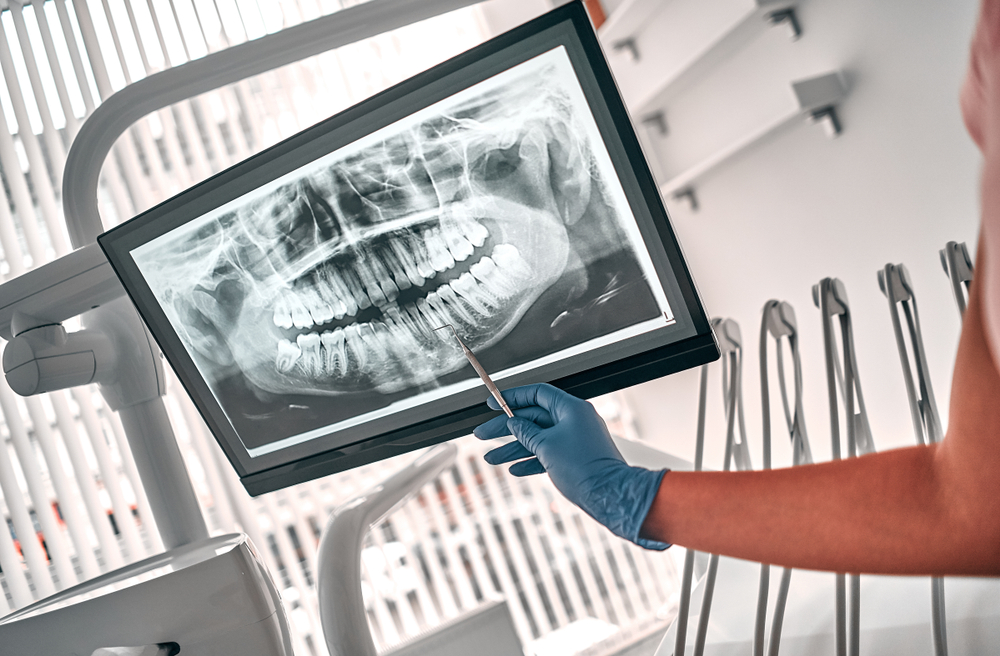
Panoramic X-rays
These offer a broad view of all teeth in both the upper and lower jaws, along with the jawbones. Panoramic X-rays are useful for planning treatments like dentures, orthodontics, extractions, and implants. They can also help detect impacted teeth, jaw disorders, and bone abnormalities.
PANORAMIC IMAGING GUIDES THIRD MOLAR CARE
Dentists rely on this wide view to plan care around wisdom teeth and other teeth that have not come in yet.
American Dental Association, ADA News, New ADA recommendations confirm dental imaging most effectively used in moderation,
Occlusal X-rays
These show the roof or floor of the mouth and are useful in detecting the development and position of unerupted teeth in children, as well as identifying jaw fractures, cysts, or abscesses.
OCCLUSAL IMAGES CAN REVEAL HIDDEN TEETH
This angle helps dentists spot an extra tooth that has not yet broken through the gum.
“Panoramic, occlusal, and periapical radiographs all can reveal a supernumerary tooth.”
American Academy of Pediatric Dentistry, Management of the Developing Dentition and Occlusion in Pediatric Dentistry
Cone Beam Computed Tomography (CBCT)
This advanced technology produces 3D images of your teeth, soft tissues, and nerves, providing far more detail than traditional X-rays. CBCT is used for surgical planning, such as placing dental implants.
CBCT GUIDES SAFER IMPLANT PLACEMENT
Dentists use this 3D scan to plan implant placement with more precision than a flat image allows.
American Dental Association, ADA News, New ADA recommendations confirm dental imaging most effectively used in moderation
Why We Recommend X-rays
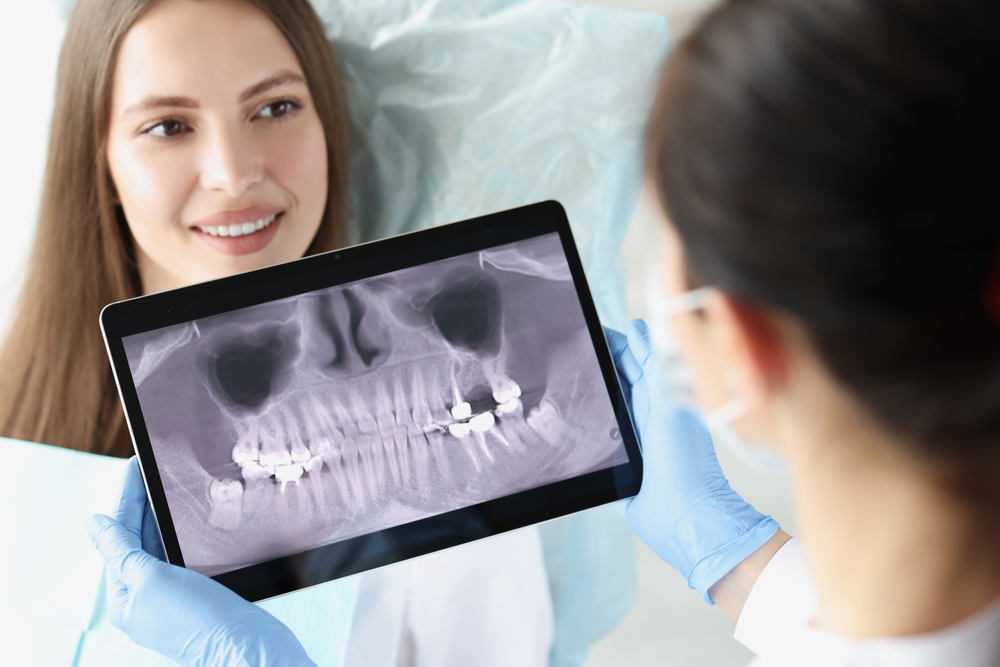
We only recommend the X-rays each patient needs, whether to catch a problem early, plan a treatment, or prevent disease from progressing. Skipping necessary imaging carries its own risks.
Schedule your check-up today!
Contact Desert Pearl Dentistry to schedule your routine check-up and keep your smile healthy with the help of dental X-rays.
Book an Appointment