The dental implant cost you see advertised online rarely matches what you actually pay. Pricing depends on several moving parts working together, not one flat number.
How many teeth you’re replacing, whether your jawbone needs rebuilding, and which materials your dentist chooses all affect the total. So does the type of restoration that sits on top. Each variable can add or subtract hundreds, sometimes thousands, of dollars.
Online price ranges rarely account for your specific mouth, bone density, or treatment goals. That’s why two people can get very different quotes for what looks like the same procedure.
The sections below walk through each cost driver one at a time. By the end, you’ll know exactly what questions to ask before your first appointment.
Key Takeaways
- The number of implants, bone condition, materials, and restoration type each affect the final price.
- Most dental plans cap or exclude implant coverage, so patients often rely on pre-tax accounts or in-house financing to cover what insurance won’t.
- Health economics research shows implants often cost less than bridges or dentures over a lifetime, even though the upfront price is higher.
- Knowing these cost drivers before your first appointment helps you ask better questions and avoid surprises.
- Below, we answer common questions about candidacy, the implant timeline, recovery, and long-term care.
What Determines the Cost of the Dental Implant Procedure
The cost of the dental implant procedure never comes from a single line item. It’s a total made up of several components, and each one shifts depending on your specific case.
The CDC reports that about 1 in 5 adults (20%) aged 75 and older have lost all their teeth. Tooth loss affects a meaningful share of American adults. Most people price implants for the first time without a clear frame of reference for the final number.
The most direct factor is how many implants you need. Each missing tooth needs its own implant post and its own surgical placement at the implant site. It also carries its own restoration fee. Replacing one tooth and replacing six are not comparable procedures.
The condition of the bone in your jaw matters just as much. If bone loss has occurred, a grafting procedure is often required before the surgical component can be placed. Bone grafting adds a separate procedure, a healing period, and additional cost to your plan. When the upper jaw lacks enough height near the sinuses, a sinus lift may also be needed first.
Several elements combine to build your final number:
- Number of implants needed
- Bone grafting or sinus lift requirements
- Restoration type (crown, bridge, or full arch)
- Materials selected for the restoration
- Diagnostic imaging and provider expertise
Does the type of restoration change the price?
Yes. A single dental implant crown costs less than an implant-supported bridge, which costs less than a full-arch prosthesis. The materials used for the crown or bridge also affect price. Zirconia and porcelain carry different price points than metal-based options, and implant systems vary by manufacturer and material grade.
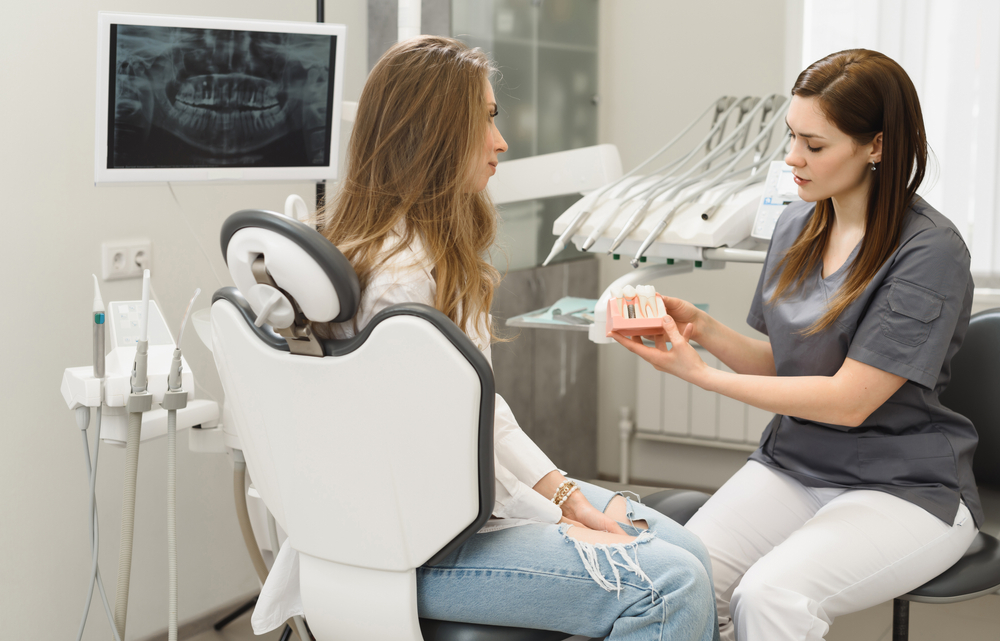
Diagnostic imaging is a line item many patients don’t expect. CT or CBCT imaging gives your provider a three-dimensional map of the implant site before surgical placement begins. This shows bone density, nerve position, and available space in ways standard X-rays can’t. Many practices also use CAD/CAM technology to design and mill restorations in-office, cutting turnaround time compared to an outside lab. Some patients ask about mini implants as a lower-cost option. These are a distinct implant system with specific clinical uses, and they aren’t right for every case.
Provider credentials are the variable patients most often overlook when comparing prices. General dentists can place implants, but providers with advanced surgical training typically charge more for that training. A study published in PLOS One identifies dentists’ training, and a relationship of trust as top priorities patients weigh almost as heavily as price when choosing where to get dental work done.
Median cost figures circulating online don’t account for any of this. That’s why a case-specific treatment plan from your provider remains the only reliable starting point.
How Dental Insurance, Financing Options, and Dental Benefits Work for Implants
Dental insurance and financing options shape what you actually pay out of pocket. But they work very differently from each other.
Medicare.gov confirms that Medicare doesn’t cover items like dentures and implants. Most dental insurance plans treat implants as elective or major restorative work. That means plans either exclude coverage entirely or cap it at an annual maximum well below the total cost.
The way your dental benefits plan categorizes the procedure matters a lot. Some plan documents cover the crown portion but exclude the implant post and surgical component. Others apply a single annual maximum across all major work.
Before assuming your policy won’t help at all, call and ask specifically about implant-related procedure codes. Some plans that exclude the implant itself will still pay toward the crown, abutment, or extraction that comes before it. That partial coverage can meaningfully lower your bill even when the headline answer is not covered.
Pre-tax savings accounts are the most common way patients close this gap. Consider these options:
- Flexible spending accounts let you set aside pre-tax dollars through your employer for qualifying dental work
- A health savings account works the same way if you’re on a high-deductible health plan
- Your employer funds a health reimbursement arrangement, but you can still apply it to eligible dental costs
Each of these accounts lowers your effective cost by reducing your taxable income.
Medicare Advantage plans sometimes include dental benefits, but implant coverage varies widely and is rarely substantial. Reviewing your specific plan documents remains the only way to know what applies to your situation.
Some patients consider dental tourism to lower costs by having implants placed abroad. The upfront price may look appealing. But dental tourism creates real challenges around follow-up care, material traceability, and provider accountability if something goes wrong. Complications after returning home often mean finding a new provider willing to take over someone else’s case. That fix can cost more than the original savings.
In-house financing options let you spread treatment cost over time instead of paying in full upfront. Providers such as CareCredit, Cherry, and Proceed Finance offer these plans. A cost estimator tool, when available, can help you model monthly payments before committing to a plan.
Are Dental Implant costs worth it compared to other tooth replacement options?
Implants cost more upfront than bridges or dentures. But health economics research shows they’re often more cost-effective over the long run.
Research published in BMC Oral Health concludes that implant treatment is more cost-effective than treatment with the three-unit fixed dental prosthesis. The reason comes down to lifespan. Implants are designed to last for decades, while other tooth replacement options typically need repair or replacement within 10 to 15 years.
A dental bridge requires filing down the two healthy teeth on either side of the gap to serve as anchors. If either anchor tooth develops a cavity or fractures later, the bridge fails and the whole restoration needs replacing. Over time, a bridge’s cumulative cost, including repairs and replacements, can approach what a single implant would have cost. Sometimes it exceeds that starting cost.
Implant-supported dentures and implant-supported bridges address larger gaps without relying on healthy adjacent teeth or adhesive. Both use implants as fixed anchors, which improves stability and reduces stress on surrounding bone and tissue. Full arch restoration using a full mouth of dental implants replaces an entire arch with a fixed prosthesis. For patients who would otherwise need removable full dentures, this approach cuts long-term maintenance and replacement costs.
Implant procedures also protect the bone in your jaw in a way bridges and dentures don’t. When you lose a tooth root and don’t replace it, the jawbone at that site gradually resorbs. That bone loss can make future implant placement harder and change the shape of your face over time. An implant post functions like a tooth root, stimulating bone and slowing that process.
A systematic review in the International Journal of Oral and Maxillofacial Surgery reports cumulative mean values of 94.6% for implant survival at the 10-year mark, supporting the durability argument. High success rates mean most patients who choose implants avoid a costly replacement cycle over time. Add up avoided retreatment, future bone grafting, and replacement prosthetics, and the long-term value usually favors the implant option.
Cost comparisons only tell part of the story, though. Comfort, chewing function, and confidence in your smile matter just as much as the math on a spreadsheet. Those factors are harder to put a price on.
Breaking Down Your Dental Implant Cost Before You Commit
Your dental implant cost depends on four variables: implant count, bone health, material choice, and restoration type. Most dental plans cover little or none of this. Knowing your financing options matters just as much as understanding the clinical details.
A short consultation can turn general price ranges into a plan built around your mouth, your goals, and your budget. The only way to get an accurate number is a direct evaluation from your provider. Ready to see exactly what your treatment would involve? Explore implant options and financing on our dental implants page to get started.
FAQs
How do I know if I’m a good candidate for dental implants?
Good candidates have enough bone density to support an implant post, healthy gum tissue, and no uncontrolled systemic conditions that could slow healing. Our dentist confirms this through imaging and a clinical exam before recommending implants as your best tooth replacement option.
How long does the dental implant process take from start to finish?
The timeline typically spans several months from your first consultation to the final restoration. Bone grafting or a sinus lift, if needed, adds healing time before implant placement begins. Osseointegration, when the implant fuses to bone, also takes time and cannot be rushed.
Does getting dental implants hurt, and what can I do about dental anxiety?
Implant placement uses local anesthesia, so most patients feel pressure rather than pain. Dental anxiety is common among people who have avoided care for years. Sedation options help patients stay comfortable, and discussing concerns with our team beforehand allows us to adjust our approach to your needs.
How do I care for dental implants after they are placed?
You care for implants just like natural teeth. Brushing twice daily, flossing around the implant site, and keeping up with professional cleanings protect the restoration and surrounding tissue. Our dentist may suggest tools like an interdental brush or water flosser for effective cleaning.
How long do dental implants last?
The implant post itself is designed to last for decades with proper care. The crown or restoration on top may eventually need replacement due to normal wear, but the implant structure beneath it often remains functional for the patient’s lifetime. Regular monitoring and professional cleanings helps catch any issues early.